Sex Positions Determine Sex Child? - No influence on his side or the other of the sex of the child that will be generated. But there are certain factors that influence the sex of the child in a sexual context.
First, sexual intercourse carried out just as likely to produce infertile sons. The reason, spermatozoa containing Y chromosomes of men will reach the egg first.
Second, if the female orgasm first, then the atmosphere in the vagina becomes alkaline. As a result, more Y sperm can survive and fertilize the egg. But of course this theory is not one hundred percent yield of the desired sex of the child.
Doctors at some pain management clinics are the equivalent to modern-day drug pushers, writes Richmond business columnist Don McNay in a piece entitled, "Making money in businesses that are supposed to (and should) be illegal."
"People spend a few minutes and lots of money to get a 'physical'," he writes. "They skip insurance and pay the clinic with cash or a credit card. The 'medical staff' will then arrange for you to get a large order of the highly addictive pain medicines prescribed by the clinic doc. You can often get the prescription filled right at the clinic."
McNay points out such clinics are "perfectly legal" in Kentucky and owners do not have to have a medical background. (A bill in the legislature would change that.) "I'm not a lawyer, but would love to own a law firm," he writes. "I'd like to own a plumbing contracting firm but not be a licensed plumber. . . . None of those options are available to me. But owning a pain management clinic is."
He likens the clinics to payday lenders, which he likens to "legalized loan sharking." He also takes issue with the "Super PAC" concept, which allows corporations to make unlimited contributions to political campaigns. "With super PACs allowing corporations to give unlimited amounts to fund campaigns," he writes, "the big corporations control the political process."
McNay concludes, "As a society, it would seem logical that we would want drug pushing, loan sharking and corporate influence peddling to stop. At the very least, we could go back to making it against the law." (Read more)
National School Breakfast Week, an observance meant to increase awareness of the availability of the federal School Breakfast Program, will be held from March 5 to 9 this year.
Research has shown students who eat breakfast score better on tests, have fewer health issues and are better behaved, says a press release from the Kentucky Department of Education. In Kentucky, about 190,000 students eat breakfast at school each day, which represents about 30 percent of public school enrollment, said spokeswoman Lisa Gross. The numbers are not broken down by district.
Schools are encouraged to participate in a spirit contest whose winners will be given a certificate of excellence by Kentucky Education Commissioner Terry Holliday. Schools can plan festivities and then share what they've done to celebrate the event. Winners will be recognized April 19. The deadline to enter is March 22. For more information about contest rules, click here.
King-size versions of Snickers and Twix bars will no longer be on store shelves in 2014, as their maker tries to improve the nutritional value of its products. (Photo by Candy Warehouse)
Mars Inc. will no longer sell chocolate products with more than 250 calories, Reuters reports. The giant Snickers and Twix contain a whopping 540 calories.
It's not the first time the Virginia-based maker has tried to improve its image. In 2007, "It said it would stop buying advertising time or space if more than a quarter of the audience was likely to be under 12 years old," Reuters reports.
Mars also makes M&Ms, Skittles and Juicy Fruit chewing gum, along with Uncle Ben's rice and Dove ice cream bars. (Read more)
The group fighting a bill that would make the key ingredient for making methamphetamine available only by prescription spent more than $194,000 last month alone to lobby lawmakers, far more than any other lobbying interest at the General Assembly.
The Consumer Healthcare Products Association "reported spending more on Frankfort lobbying for the month than the next eight largest groups combined," reports Tom Loftus of The Courier-Journal. "That's almost an obscene amount of money to be spending on one month on one issue," said Senate Majority Leader Robert Stivers, R-Manchester. Stivers is sponsoring the bill, which would require a prescription for cold and allergy medicine that contains pseudoephedrine.
The group with the second highest spending was the Kentucky Hospital Association, at $36,120.
CHPA "is a group of manufacturers and distributors of over-the-counter medicines whose members include Bayer Healthcare, GlaxoSmithKline and Johnson & Johnson," Loftus reports. In a statement Monday, the group said it is again "efforts by some legislators to deny law-abiding citizens nonprescription access to certain cold and allergy medicines they depend on."
The $194,957.76 spent on lobbying apparently does not include what the CHPA spent on broadcast advertising, which it does not have to report. As of Feb. 3, the group had spent more than $82,000 running ads on Louisville, Lexington and Somerset radio stations owned by Clear Channel Communications Inc., the nation's largest radio operator, according to public-inspection files at those stations, the only ones that have been checked by Kentucky Health News and its journalistic partner, Jonah Engle. In 2011, CHPA paid the Kentucky Association of Radio and Television more than $93,000 to run ads, according to public-inspection files from Cumulus Broadcasting, another major owner of stations in Kentucky.
As for lobbying expenses, more than $12,000 was spent on salaries for three lobbyists, plus nearly $4,000 for food, lodging, beverage and transportation expenses. More than $150,000 was spent "for professional and technical research and assistance," plus nearly $27,000 for "educational and promotional items."
"I'm not surprised they reported so much for lobbying because it's obvious they're doing a pretty good job of getting their message out ... which I believe is a misleading scare campaign," said Sen. Ray Jones, D-Pikeville, who is co-sponsoring the meds-for-meth bill. (Read more)
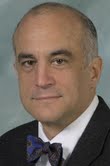
The dean of the University of Louisville School of Medicine, Edward C. Halperin, is stepping down from his post to become chief executive officer and chancellor for health affairs of New York Medical College and provost for biomedical affairs at Touro College and University System.
His new job starts May 1. During his tenure at U of L, which started in 2006, he recruited nine department chairs; applications for admissions rose 67 percent; research funding in the school of medicine increased 28.3 percent to $111.4 million; a post-baccalaureate program was established; and three dual-degree programs were created.
"Dr. Halperin has been instrumental in moving our School of Medicine to a different level in terms of our missions of education, research and clinical care," said Dr. James R. Ramsey, U of L president. "He has raised the standards we now hold ourselves to in terms of the students we accept and graduate from the School of Medicine, as well as the faculty we recruit."
U of L said it will name an interim dean and start a national search to replace Halperin in the coming weeks. (Read more)
Smokers can greatly reduce their risk of disease if they replace their cigarettes with spit-free smokeless tobacco or electronic cigarettes, University of Louisville professor Brad Rodu, right, said in a presentation at the annual meeting of the American Association for the Advancement of Science last week. It's the same message residents of Owensboro heard in an advertising campaign with which Rodu was involved late last year, one partly funded with grants from the tobacco industry.
"Quit or die: That's been the brutal message delivered to 45 million American smokers, and it has helped contribute to 443,000 deaths per year," Rodu said in a U of L press release. "The truth, however, is that total nicotine and tobacco abstinence is unattainable and unnecessary for many smokers."
Rodu's 20 years of research has reportedly shown that e-cigs and smokeless tobacco are relatively safe alternatives for smokers who can't or are unwilling to quit nicotine. "Nicotine is addictive, but it is not the cause of any smoking-related disease," he said. "Like caffeine, nicotine can be used safely by consumers."
Research has shown smokeless products are 98 percent safer than cigarettes, the press release states. A 2002 study in the United Kingdom found smokeless tobacco to be up to 1,000 times less hazardous than smoking.
As for whether smokeless tobacco can contribute to mouth cancer, Rodu said the risk "is extremely low." "The annual mortality rate among long-term dry snuff users is 12 deaths per 100,000 and the rate among users of more popular snus, moist snuff and chewing tobacco is much lower. For perspective, the death rate among automobile users is 11 per 100,000 according to the 2009 report from the National Highway Traffic Safety Administration. Compare those to the rate among smokers: more than 600 deaths per 100,000 per year." (Read more)
The Oral Cancer Foundation's website says about 37,000 Americans will be diagnosed with oral or pharyngeal cancer this year and cause about 8,000 deaths. The foundation does not support the contention that smokeless tobacco is "safe." "Promoted by some as a safer alternative to smoking, it has in actuality not proven to be any safer to those who use it when referring to oral cancers," the website reads. "Campaigns to promote the safety of smokeless are being initiated, but it is clear that while it may reduce lung cancers, it has a negative effect on the rates of oral cancers."